
Azafrán de Cachemira (Grado Mongra)
// Azafrán de Cachemira — Origen Pampore, probado en laboratorio
Azafrán de Cachemira: Procedente de Pampore, la capital del azafrán de la India
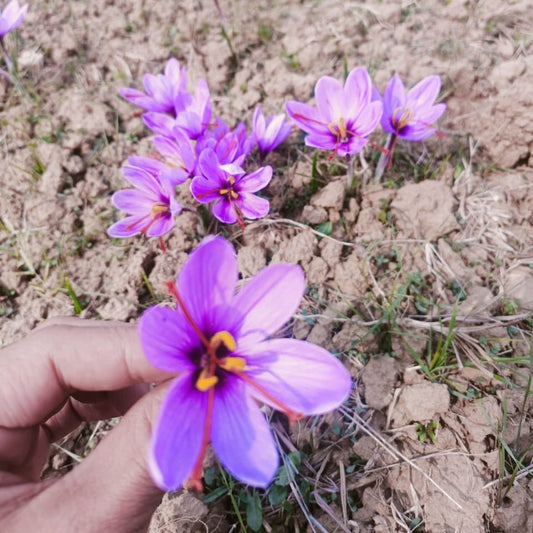
El azafrán de Cachemira (Crocus sativus L.) se cultiva en la meseta de Karewas del valle de Cachemira, siendo la región de Pampore, a una altitud de 1.600-1.800 metros, la zona de cultivo principal y de mayor importancia histórica. La combinación de suelo franco-limoso, inviernos fríos y una variación de temperatura estacional definida produce estigmas con un perfil químico —alta crocina, alta picrocrocina, aroma característico de safranal— que distingue al auténtico azafrán de Cachemira de otros orígenes.
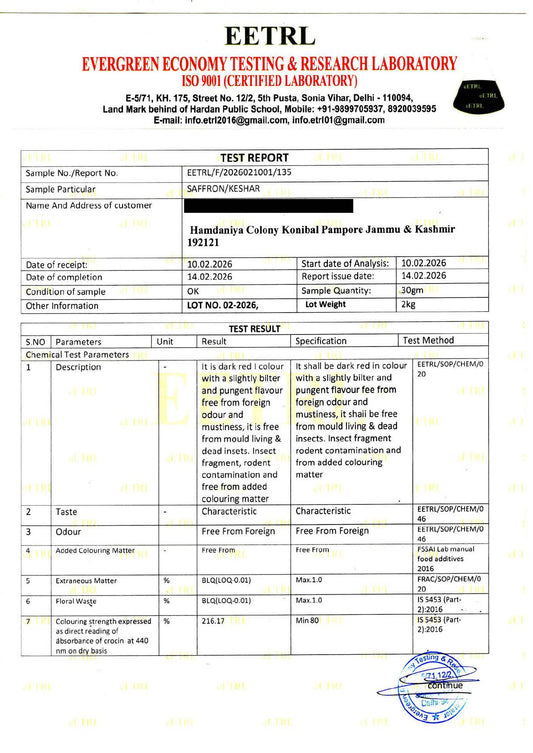
Herbuno obtiene el azafrán directamente de Pampore, Jammu y Cachemira. Cada lote se somete a la norma india IS 5453 (Parte-2):2016 —la norma aplicable para la verificación de la calidad del azafrán— en cuanto a la fuerza del color, amargor, aroma, humedad, marcadores de adulteración y límites individuales de metales pesados. Nuestro lote actual ha sido probado con más del doble de la especificación mínima de fuerza de color, con valores de amargor y aroma consistentes con el azafrán de Cachemira genuino de primera calidad. Informe de prueba completo disponible bajo petición.
del color
Verificada
Sin rastro
Can't find your product here? Get in touch and we will source it for you!




// Who Sources Kashmiri Saffron From Herbuno
Serving Gourmet Food Brands, Premium Supplement Manufacturers & Luxury Beverage Developers
Gourmet Food Manufacturers & Fine Dining
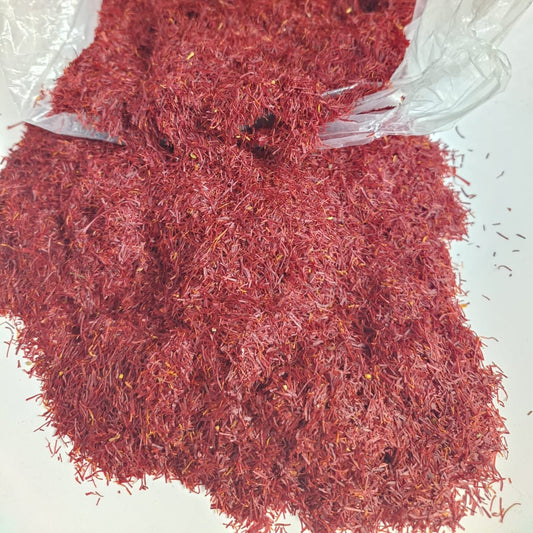
Grade I Kashmiri saffron for premium food applications — rice dishes, sauces, confectionery, ice cream, and artisan products where maximum crocin content, intense aroma, and authentic origin documentation support premium retail positioning. Full IS 5453 test report and lab CoA available to substantiate origin claims on packaging and in trade marketing.
Supplement & Nutraceutical Brands
Saffron extract and whole saffron for supplement formulations targeting mood support, cognitive function, and sleep quality — the three most commercially significant health benefit areas for saffron in the nutraceutical market. Clinical studies on saffron mood support typically use 30mg per day of standardised extract. Confirm active compound content and standardisation level at enquiry for supplement-grade applications.
Luxury Beverage & Tea Brands
Kashmiri saffron for premium tea blends, golden milk formulations, functional beverage concentrates, and artisan drink mixes where saffron is a hero ingredient rather than a trace addition. Kahwa — the traditional Kashmiri saffron tea — is a growing category in premium wellness beverage markets. Whole threads and saffron powder formats available depending on application.
// Quality & Documentation
What Ships With Every Kashmiri Saffron Order
Colouring Strength
Lab Tested
Shelf Life
Order
- ✓ Certificate of Analysis (CoA) — per-lot document covering botanical identity, crocin colouring strength, picrocrocin, safranal, moisture, adulteration markers (added colouring, extraneous matter), and individual heavy metals — tested to IS 5453 (Part-2):2016.
- ✓ IS 5453 Lab Test Report — full spectrophotometric analysis covering crocin, picrocrocin, safranal, moisture, and adulteration markers. Issued per lot from ISO 9001 certified laboratory. Available on request.
- ◎ Supplier Origin Documentation — supplier address and sourcing documentation confirming Pampore, Jammu & Kashmir provenance. Available on request.
- ◎ Phytosanitary Certificate & Certificate of Origin — available on request for international shipments. Associated costs apply.
// Common Questions
Kashmiri Saffron — Frequently Asked Questions
// Related Collections
Retoma donde lo dejaste